What Oatly Gets Right About Brand Voice
A teardown of the most imitated — and least copyable — voice in consumer goods. What Oatly actually does, why it works, and how you'd bottle it.
Most brand voices are a paint job. A few adjectives in a deck — “bold, playful, human” — that no one can actually act on, and that quietly evaporate the moment a real sentence has to get written.
Oatly’s voice is not a paint job. It’s load-bearing. You can remove the logo from almost anything they publish and still know it’s them. That’s the test that matters, and almost no consumer brand passes it.
We pulled ~110,000 words of Oatly’s public writing — product pages, the FAQ, sustainability reports, social — to work out what’s actually going on under the jokes. Here’s what they get right, why it works, and the parts you can steal.
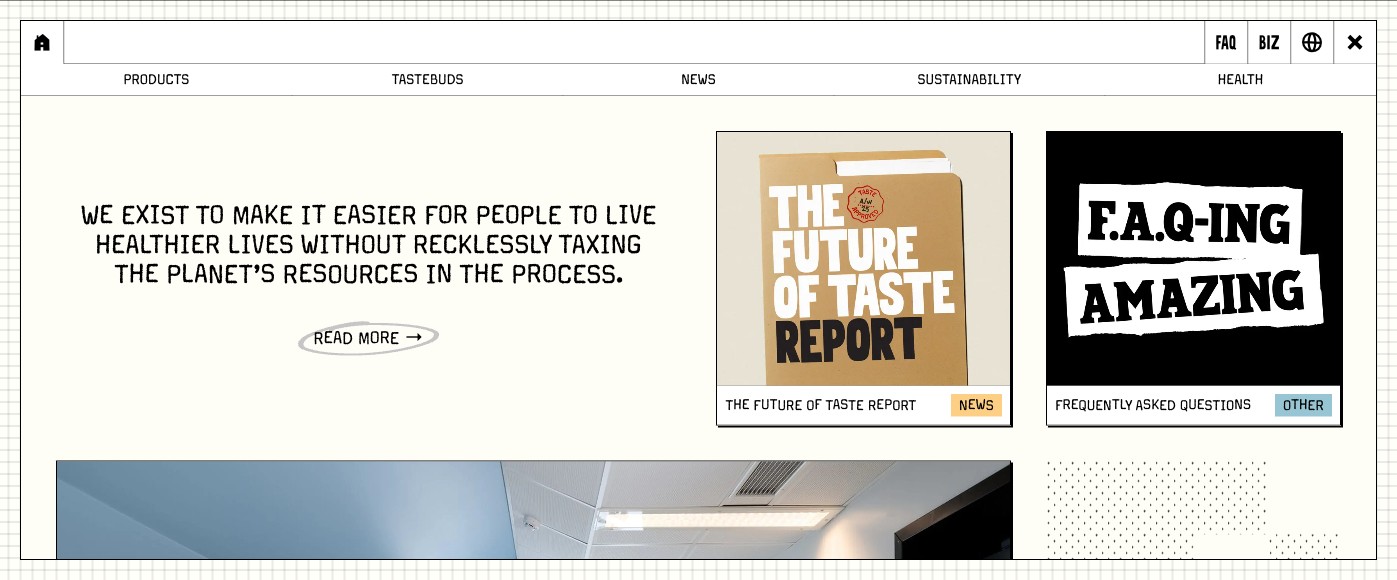
The one move that defines them
If you only take one thing from Oatly, take this. Every product page has two headings: “What’s amazing” and “What might seem less amazing.” And the second one is real. They use it to tell you the unflattering truth before you can find it yourself.
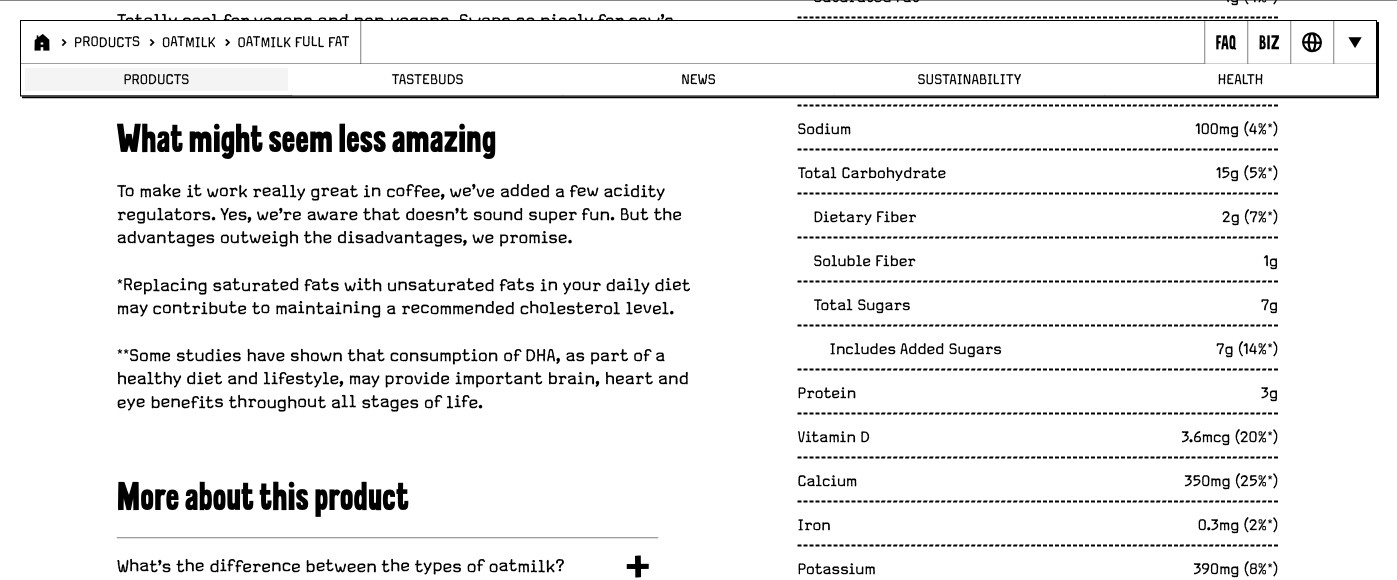
To make it work really great in coffee, we’ve added a few acidity regulators. Yes, we’re aware that doesn’t sound super fun. But the advantages outweigh the disadvantages, we promise.
A normal brand buries the additive. Oatly puts a spotlight on it and cracks a joke at its own expense. The counterintuitive result: admitting the flaw makes you trust everything else on the page more. Honesty is a credibility multiplier, and Oatly spends it like it’s free.
Why it works: readers grade brands on a curve of suspicion. The moment you volunteer the bad news, the curve resets. You stop sounding like marketing and start sounding like a person who'd tell you the truth.
What they do really well
The honesty section is the headline act. But it only lands because five smaller habits run underneath everything they write.
They break the fourth wall about their own marketing. Oatly will tell you, mid-sentence, why the sentence exists:
…we desperately need to improve our SEO, which is another good reason this very long feature on overnight oats exists.
Naming the game is the charm. It signals “we’re not going to insult you by pretending this is anything other than what it is.”
They de-jargon science in the same breath they use it. Oatly is a food-science company that refuses to sound like one:
It has amazing beta-glucans (big, scientific word for soluble fiber from oats).
The term stays (it’s true and it matters); the translation rides along in parentheses. You feel smarter, not lectured.
They pick a fight — with the industry, never the reader. The enemy is dairy-as-a-system, and the jokes are aimed squarely at it:
…unless you’re a dairy executive whose total livelihood is dependent on milk being produced by cows forever ever, Oatly is not bad for you.
Note who the punchline never targets: you. A brand with a villain is easy to remember. A brand that makes the customer the villain is easy to resent. Oatly knows the difference.
They make instructions almost insultingly simple. When something is genuinely easy, they let the simplicity be the joke:
Pour the oatmilk into a glass, mug or a cup. Drink.
They keep the receipts, even mid-joke. The voice is loose; the facts are not. The FAQ is stuffed with real citations and a running gag aimed at the person checking them (“Yo, fact checker! Here is a fancy table…”). Funny and footnoted is a rare combination, and it’s why the humor never reads as hand-waving.
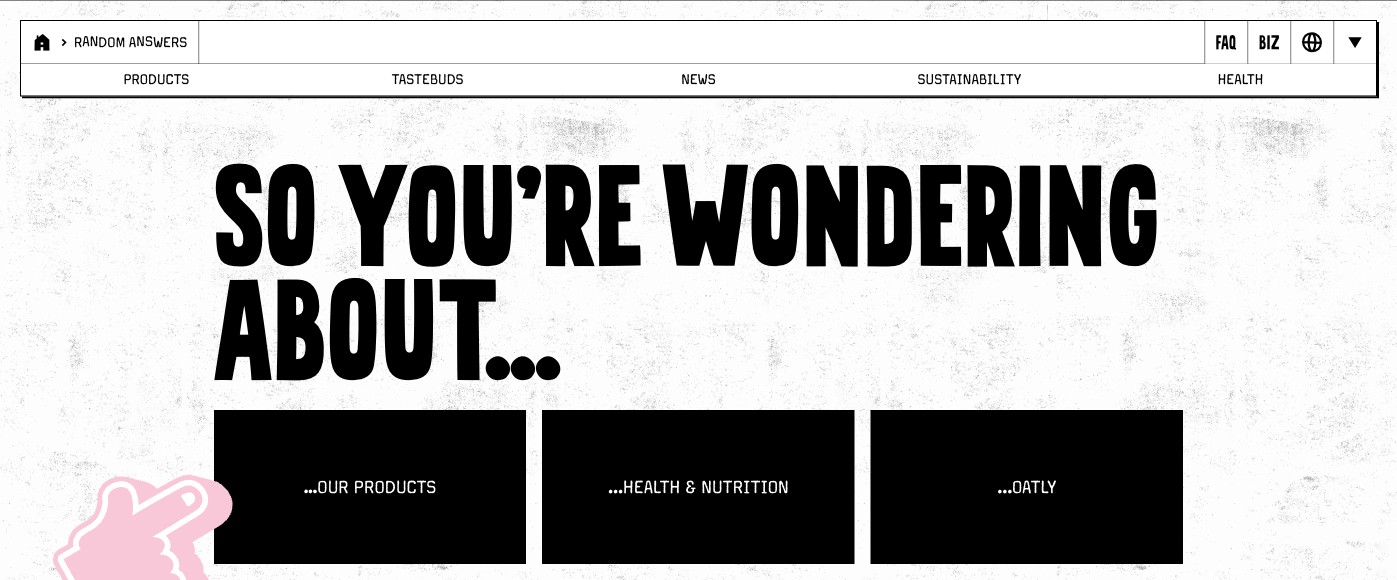
The hard part: holding it across channels
Any brand can buy one great hero page a committee fussed over for a month. The real test of a voice is whether it survives a random Tuesday at 2pm in a social caption — and Oatly’s doesn’t just survive the jump, it gets sharper.
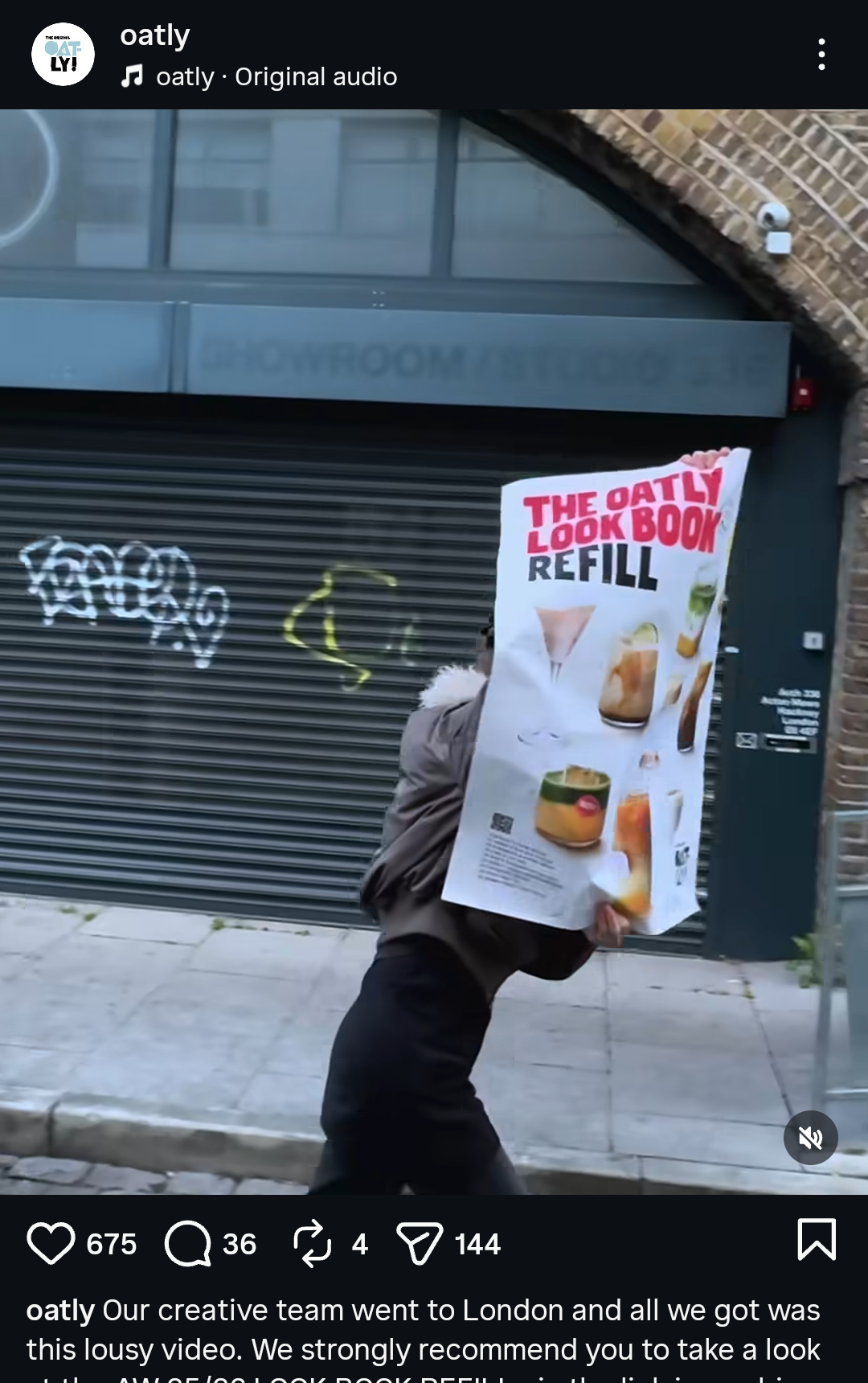
On Instagram it goes clipped and self-deprecating, often mocking the very post you’re reading:
Our creative team went to London and all we got was this lousy video.
Just like any other company we sometimes do financial reporting.
On Facebook the same honesty stretches into long form — it’ll even narrate the writer behind the curtain:
And now we’ll end this caption with a totally superfluous wrap up sentence, but you know how social media writer persons can be.
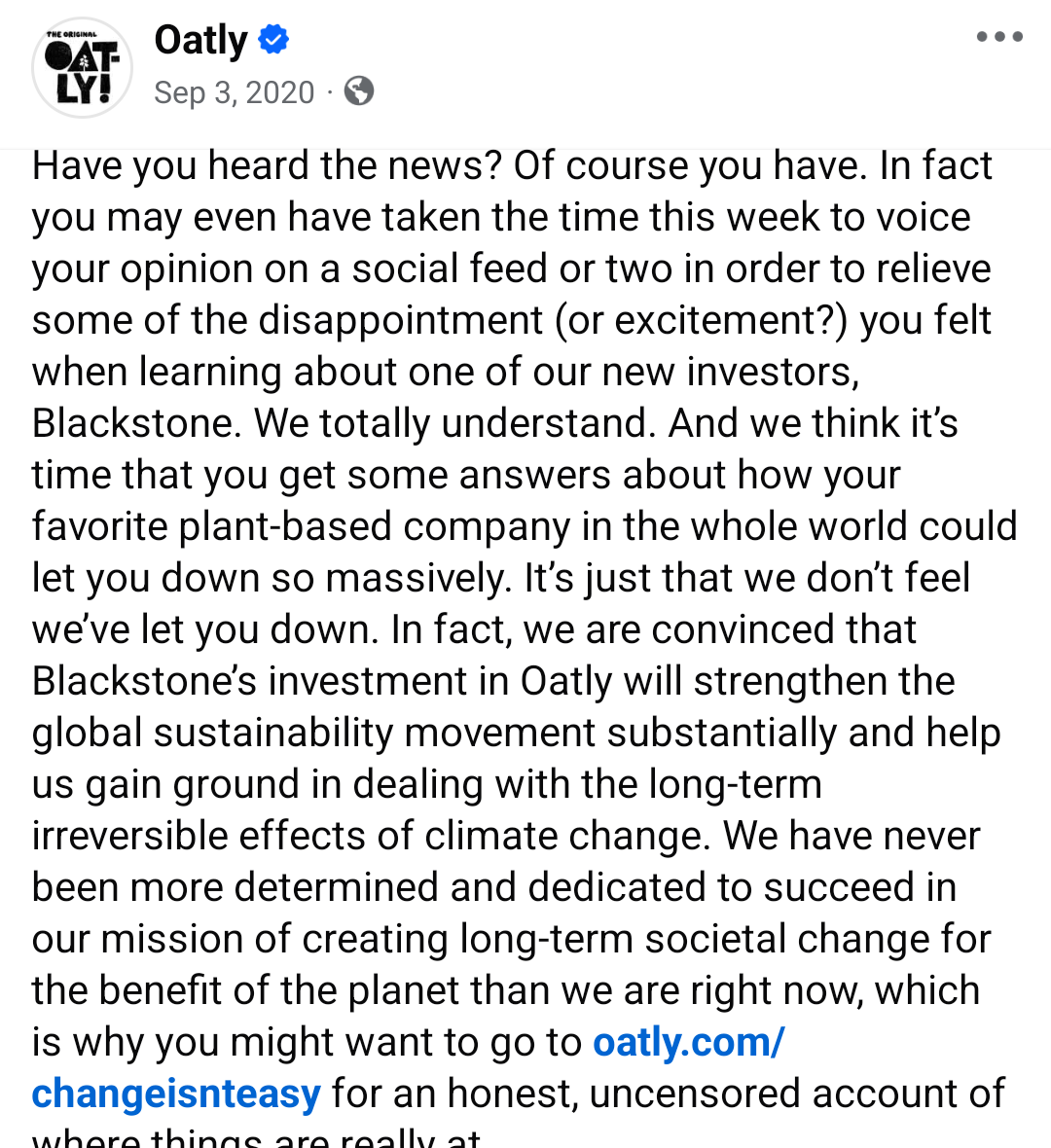
And when a controversial new investor showed up and fans were furious, the Facebook voice didn’t reach for the crisis-PR template — it sent people to “an honest, uncensored account of where things are really at.” Same move as the product page, different room.
On X, it compresses again — fast, dry, still self-aware. Announcing their IPO: “What does being a public company mean? That we are owned by the public, of course!” Same de-jargon-with-a-wink, in a single breath.
And TikTok is the exception that proves the rule. The captions there are almost empty — a handful of words and some hashtags. The voice didn’t vanish; it just moved into the video, because that’s where the channel actually lives. A brand with a real voice puts it wherever the attention is, in whatever form the room rewards.
Look at what’s constant and what flexes. The DNA never changes: radical honesty, dry meta, the joke aimed at the system or itself. Only the dial moves — clipped on X and Instagram, rambling-but-controlled on Facebook, buttoned-up in a sustainability report, migrated into the video on TikTok. That’s the thing almost every brand gets backwards: a voice should be consistent in kind and adaptive in degree. Most are the reverse — identical length and format everywhere, with no actual personality anywhere.
This is exactly what a voice.md is built for. It doesn't freeze one tone. It captures the rules that stay constant — the honesty, the meta, the anti-dairy wink — plus per-channel "mode rules" for how hard to push each one. Constant DNA, adjustable dial. That's how one voice stays itself across a product page, an Instagram caption, and a 600-word Facebook ramble.
Even the 404
The truest test of a voice is the place nobody checks. Hit a dead link on oatly.com and you don’t get a default error page — you get a pixelated “glitch in the matrix” and a punchline.
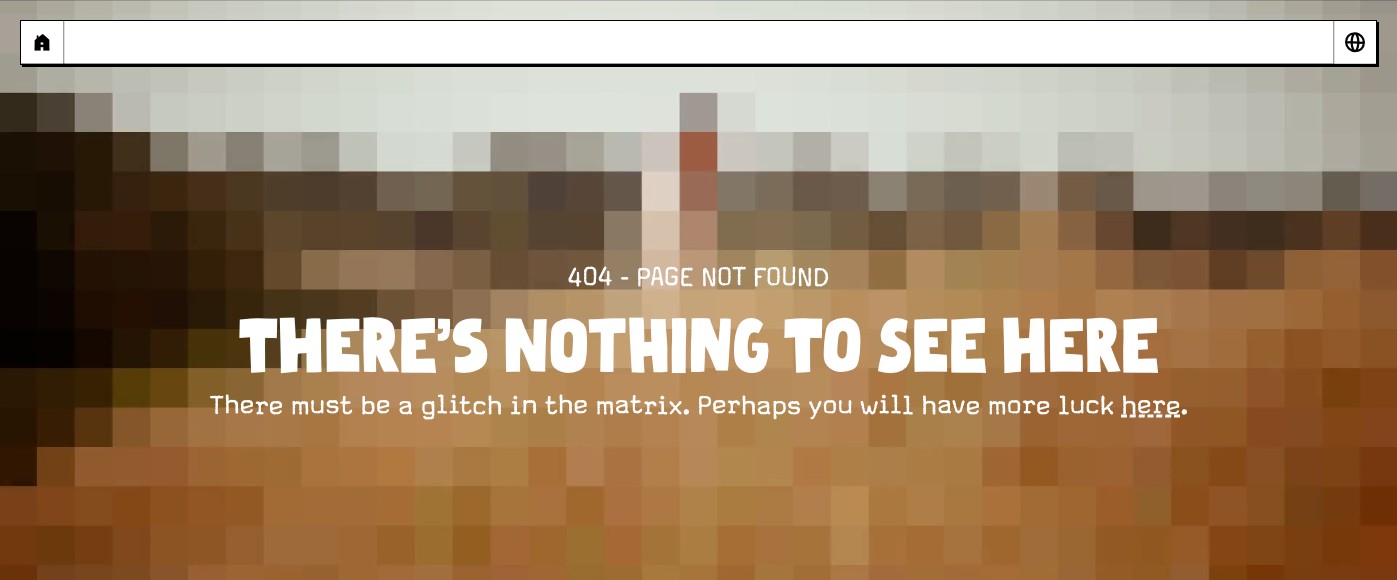
That’s the whole thesis in one dead link: the voice isn’t a campaign you switch on, it’s a system that reaches every corner — even the ones nobody’s supposed to find.
Steal this, leave that
A teardown is useless if you can’t act on it. Here’s the split: the moves that transfer to any brand, and the bits that are Oatly-specific cosplay if you copy them straight.
Steal this
- A real "here's the catch" section in your product copy.
- Translating one piece of jargon, in parentheses, every time you use it.
- A villain that is a system, never your customer.
- Saying the quiet part — name why the page exists.
- Citations behind the jokes.
Leave on the shelf
- ALL-CAPS provocation as a default setting.
- Their specific deadpan — it's their idiolect, not a template.
- Manufactured flaws. The honesty only works because it's true.
- Picking a fight if you don't actually have one.
- Irony with nothing underneath it.
It’s not just cute — it works
The easy dismissal is that this is whimsy. The numbers say otherwise. Oatly went from a niche Swedish oat company to a category-defining brand, and the voice was the growth engine, not the garnish.
A voice this consistent across this much surface area isn’t an accident or one gifted copywriter. It’s a system — a shared, written understanding of exactly how the brand talks, applied by everyone, on every page, for years.
Which is the interesting part
That system can be written down. The rules Oatly follows — lead with the catch, translate the jargon, aim the joke at the system, keep the receipts — are concrete enough to put in a file and hand to anyone (or anything) that writes on your behalf.
That file is what we build at VoicePort. Feed in your real writing and you get a voice.md: a portable set of rules an AI can follow so its output sounds like you, not like the beige middle of the internet. Here’s a slice of the one we generated from Oatly’s own corpus:
**Rule:** Put the bad news in writing, on purpose
- **Do:** state the flaw plainly, often in a labeled
  section ("What might seem less amazing").
- **Avoid:** burying, spinning, or omitting it.
- **In-voice:** "Yes, we add sugar to this one —
  sweetness is the whole point of a flavored creamer,
  so we're not going to pretend otherwise."
- **Wrong:** "Crafted to the highest standards of
  quality and taste."
The point: Oatly pays a team to stay this consistent. A voice.md gets you the same discipline — one written source of truth for how you sound — without the team.
Upload your actual writing. VoicePort turns it into a voice.md file that makes AI sound like you — across ChatGPT, Claude, Gemini, and the rest.
Get your voice.md fileQuotes and screenshots are from Oatly's public US site, captured May 2026, used here for commentary and criticism. Revenue and valuation figures are widely reported. We're not affiliated with Oatly — we just think they're really good at this.